Gravel or Brick for a Garden Path? Choose the Character You Want
Gravel or brick for a garden path? Compare colour, texture, edges and upkeep to choose a surface that suits your route and complements nearby materials.
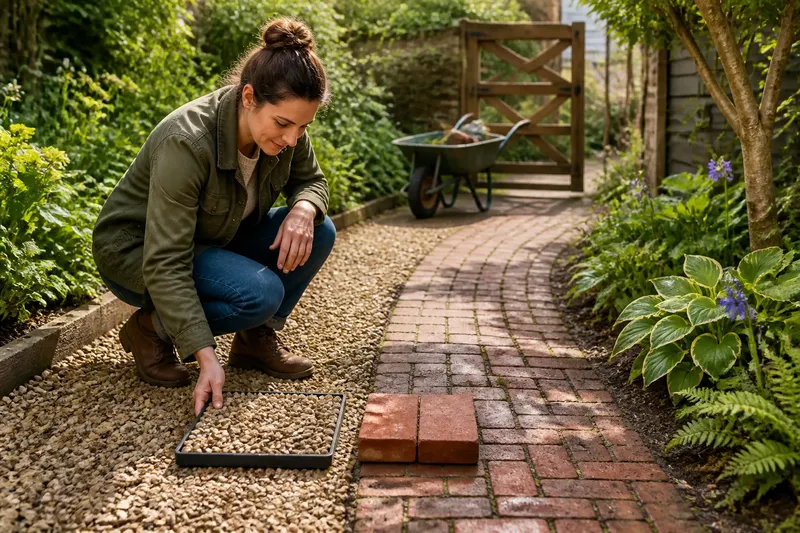
Will gravel or brick make your garden path easier to live with? A few handfuls of each beside the proposed route can reveal more than a colour card: gravel shifts underfoot, while brick creates a firm, patterned surface. Compare how each handles the actual journey, from a muddy pair of boots to a wheelbarrow turning at the gate.
Start with the jobs the path must handle
List what regularly travels along the route. Shoes, garden carts, bins and bicycles place different demands on a surface. Gravel can shift beneath narrow wheels and migrate into adjoining beds; a laid brick surface gives wheels a more continuous plane, though uneven or damaged paving can still catch them.
Think about the route’s edges, too. Gravel needs a boundary that keeps stones where they belong. This might be a metal edging strip, set bricks or a timber board, chosen to suit the garden and the ground. Brick paving has visible joints and a defined edge, but its layout needs a stable base and careful installation.
Water changes the practical choice. Observe where rain runs and where it collects before deciding on a surface or base. Neither material corrects a poorly drained route by itself. For a path beside a building or on sloping ground, ask a local paving professional how the proposed construction will manage water.
Compare sound, footing and everyday care
Gravel makes a distinct crunch under shoes. That sound may be welcome near a gate, but less so beside a quiet sitting area or a bedroom window. Brick is generally quieter to walk on, although grit caught between units can still make a path sound rough.
Footing depends on the exact material and installation. Loose gravel may roll or scatter, especially where the route bends; ask a supplier about angular aggregates intended for paths, and consider how the surface feels under the footwear used in your household. Brick can offer a steadier tread when its units sit evenly, but moss, algae or settled joints may make it slippery. Keep either surface clear of leaves and check it after wet weather.
Maintenance differs in character rather than disappearing. Gravel may need raking back from borders and replenishing where it thins. Brick joints may need attention if weeds take hold or bedding shifts. Choose the routine you are more likely to keep up with, not an imagined maintenance-free option.
Use a material checklist before placing an order
- Wheels: Roll the garden cart over a small gravel sample. If stones scatter or the wheels sink, ask about a more suitable aggregate or favour a firm brick route.
- Edging: Mark both sides of the proposed path with string. If the line meets a bed or lawn without a workable boundary, plan an edging detail before choosing gravel; otherwise, compare a contained gravel edge with brick.
- Rain: After wet weather, note puddles and runoff along the route. If water gathers, resolve the drainage and ground-preparation plan before selecting either material; if it drains away, proceed to compare surface samples.
- Footing: Walk across each sample in the shoes commonly worn in the garden. If gravel shifts uncomfortably, reject that grade or consider brick; if brick feels uneven, check the proposed laying method before proceeding.
- Sound: Walk the route at a time when nearby rooms are occupied. If gravel’s crunch would disturb them, favour brick or choose a quieter route; if the sound is acceptable, keep gravel in the running.
- Care: Look at nearby borders for loose stones, leaf litter and weeds in paving joints. If frequent tidying would be unwelcome, choose the surface whose likely upkeep fits your habits; if both seem manageable, compare their appearance next.
- Supply: Ask the supplier whether the gravel is intended for paths or whether the bricks are suitable for paving. If the intended use is unclear, request product guidance before buying; if it is clear, check that the material suits the planned base and installation.
Check how colour and pattern work at close range
Gravel’s colour comes from a mix of individual stones, so a sample can look different when scattered across a wider patch. Ask to see the aggregate loose, not only in a photograph or bag. A restrained blend may sit quietly beside foliage; a brighter stone can become a feature in its own right.
Brick gives you a choice of unit colour, surface and laying pattern. Running bond creates a strong direction along the route. A pattern with more crosswise joints can make a short stretch feel less like an arrow. Look at the actual bricks together, since variation between units is part of their appearance.
Imagine a household with a garden cart, a gate-to-shed route and a leafy border that sheds leaves. They place a tray of path gravel and two paving bricks beside the route, roll the cart across the gravel, then walk over both samples after rain. If the cart scatters the loose stones and the bricks remain even underfoot, they choose a properly prepared brick path, accepting that joints will need weeding. If the cart rolls comfortably and the household prefers the crunch, they choose gravel with a firm, defined edge and plan to rake stray stones back.
Which surface suits your route?
Is gravel suitable for a garden cart?
It depends on the aggregate and how firmly the path is prepared. Try the intended wheels on a sample, and ask the supplier whether the material is suitable for a path carrying a cart.
Does a brick path need edging?
Brick paving needs a stable edge detail to help keep the laid units in position. Ask the installer how the edge will be formed for your ground and path design.
Which surface is easier to keep clear of leaves?
Leaves can be swept or picked from either surface, but small debris can lodge among gravel stones or in brick joints. Try the cleanup method you would use, such as a hand rake or stiff broom, on a sample area.
What should I ask a paving supplier?
Ask whether the gravel is intended for paths or the brick for paving, and request guidance on the suitable base and installation. For drainage, slopes or uncertain ground conditions, consult a qualified local paving professional.
Choose gravel or brick for the routine you prefer
For gravel or brick for a garden path, let the route’s everyday demands lead the decision. Gravel suits a household willing to manage a loose surface and its edges; brick suits one that prefers a laid pattern and accepts occasional joint care. Check product guidance and the ground beneath the path before committing, especially where water or a slope is involved.
One final detail is easy to overlook: decide how the path meets the gate, shed threshold or existing paving. A neat transition prevents a sudden lip or a spill of loose stones from becoming the first thing you notice each time you use the route.