The More Plant Varieties, the Better? A Common Garden Assumption
More plant varieties do not automatically improve a garden border. Learn how to choose additions that suit its soil, light, space and planting purpose.
How many plant varieties does a small garden border need? There is no useful tally to aim for: the better question is whether each plant suits the site and has room to grow. A crowded shopping list can create more work without solving the border’s actual problem.
Imagine a clearly hypothetical situation: Rowan inherits a narrow front border beside a path. One patch is bare, while a vigorous plant is leaning over the paving. Rowan considers buying several new varieties to fill the gap, then pauses to check the border’s conditions and the plants already there. That small change in approach helps distinguish a genuine planting need from an urge to add something new.
Count the space and conditions before the varieties
A plant list says nothing about whether its members can thrive together. Start with the border itself: note which parts receive sun or shade, where the soil stays damp or dries quickly, and how much clear ground is available. A path, wall, drain or gate can limit the room a plant has to spread.
Then identify the established plants. Check which are healthy, which are struggling and which have spread beyond their allotted space. If a plant is failing, consider whether the cause may be its position, soil or available light before replacing it with another variety. A new plant put into the same unsuitable conditions may struggle too.
For each possible addition, compare the plant label’s guidance on mature height and spread, light, soil and watering with the border’s conditions. Treat the label as a starting point, not a promise: local climate and the garden’s exact conditions matter. If the information is unclear, ask a knowledgeable local nursery or gardening adviser before buying.
Work out what the border needs to support
A border may need ground cover, a soft edge beside paving, a taller plant to screen a fence, or flowers that attract attention at a particular time of year. Decide which need matters most. Trying to solve several problems with one new purchase can lead to a plant that fits none of them well.
Rowan checks the leaning plant before choosing a replacement. If it is simply too large for the narrow edge, moving or dividing it might be an option, provided its condition and the season make that sensible. If it is unhealthy, Rowan looks for a likely cause first. Adding another plant beside it would not address either problem.
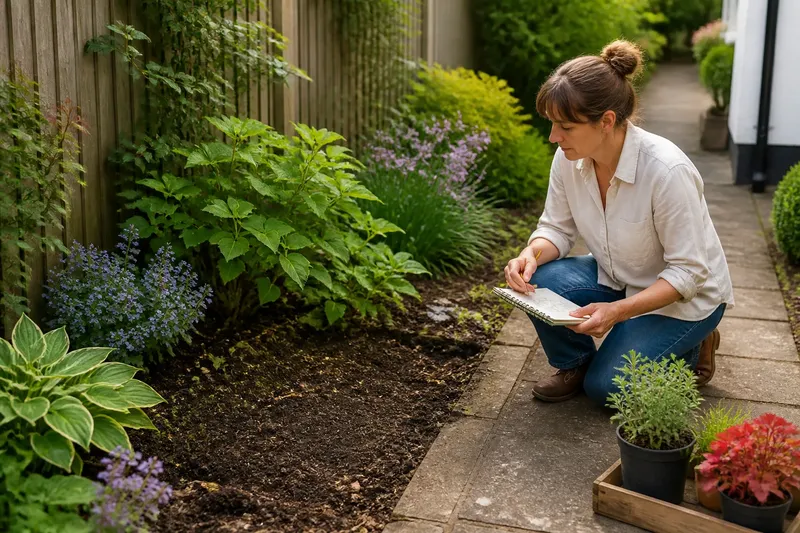
Make a short site note before shopping. A pencil sketch can show the bare patch, the path, the fence and the existing plants. Add notes such as “dry beside wall” or “shade from hedge”. This gives a nursery conversation something concrete to work from and helps rule out plants that need conditions the border cannot offer.
Use a buying check that leads to a decision
Before adding a variety, run through these checks. Each observation should lead to a clear choice rather than a vague impression.
- Check whether the proposed plant’s light needs match the spot; if they do, keep it under consideration, but if they do not, choose a plant suited to the actual light.
- Check whether the soil is often damp, dry or somewhere between; if the plant suits that condition, keep it on the list, but if not, improve the site only if practical or select another plant.
- Check the label’s mature spread against the open ground; if the plant can fit without blocking the path or crowding neighbours, consider it, but if not, choose a smaller-growing option or leave the gap open.
- Check whether the border needs the plant’s main feature, such as foliage cover, flowers or height; if that need is real, continue comparing, but if it is not, do not buy it merely because it is attractive in a pot.
- Check whether an existing plant could fill the gap after suitable moving or division; if that is appropriate for the plant and season, consider using it, but if not, look for a new plant that fits the site.
- Check whether the plant’s care needs are manageable for the gardener; if they are, keep it in contention, but if not, choose a less demanding option or rethink the planting plan.
Compare the options before choosing a new variety
Suppose Rowan’s invented border has a bare patch beside a fence, with soil that dries quickly and receives partial shade. The path leaves little room for plants that spread widely. Rowan checks the labels of two hypothetical nursery choices: one calls for reliably moist soil and has a broad mature spread; the other tolerates drier conditions, suits partial shade and stays within the available space. Rowan sets aside the first because its stated needs conflict with the site, then considers the second only if its care requirements and intended role also make sense. The result is a shortlist based on fit, not simply flower colour or novelty.
This comparison also clarifies when not to plant. If neither option suits the conditions, Rowan can leave the space open while considering a site change or a different plant later. An empty patch is preferable to an unsuitable purchase that needs constant correction.
Some plants offer more than one useful feature. A low-growing plant may cover exposed soil while softening the path edge; a taller one might screen a fence and provide flowers. Check that the combined roles do not come at the expense of a good fit with the site. A plant cannot solve a design problem if it is likely to struggle where it is placed.
Questions gardeners ask about plant varieties?
How do I choose plants for a small border?
Start with the available space, light and soil, then check each candidate’s mature spread and care needs. Choose only plants that fit those conditions and answer a clear need in the border.
Should I buy a plant before improving the soil?
First check whether the plant suits the soil as it is. If it does not, decide whether changing the soil is practical and appropriate; otherwise, choose a plant better matched to the existing conditions.
Can I fill a gap by moving a plant?
Possibly, but the right choice depends on the plant’s health, growth habit and the season. Ask a local gardening adviser if you are unsure, and avoid moving a plant that is already stressed.
What if none of the available plants suits the site?
Wait rather than buying a poor fit. You can keep the area open, review its conditions or seek advice from a local nursery before deciding what to try next.
Let the planting settle before expanding it
After planting, give the chosen variety time to establish according to its care needs. Watch for signs that it is thriving, such as healthy growth, and for problems such as wilting, poor growth or crowding. If it struggles, check water, light, soil and space before adding another plant to compensate.
Keep a simple note of what was planted and where, along with any care instructions from the label or nursery. That record can make later decisions easier: if a spot repeatedly proves too dry or shaded for a chosen plant, the next choice can respond to that condition rather than repeat the mismatch.
The search phrase “more plant varieties” does not point to a target number. It points to a practical choice: add a plant when its needs suit the site and the border has a reason for it. Check the conditions, compare the available space with the plant’s expected growth, and be willing to leave a gap until the right fit turns up.