A Late-Autumn Garden Visit for Shape and Structure
A late-autumn garden visit helps you read stems, seed heads and silhouettes, then turn what you notice into a clear note for future planting decisions.
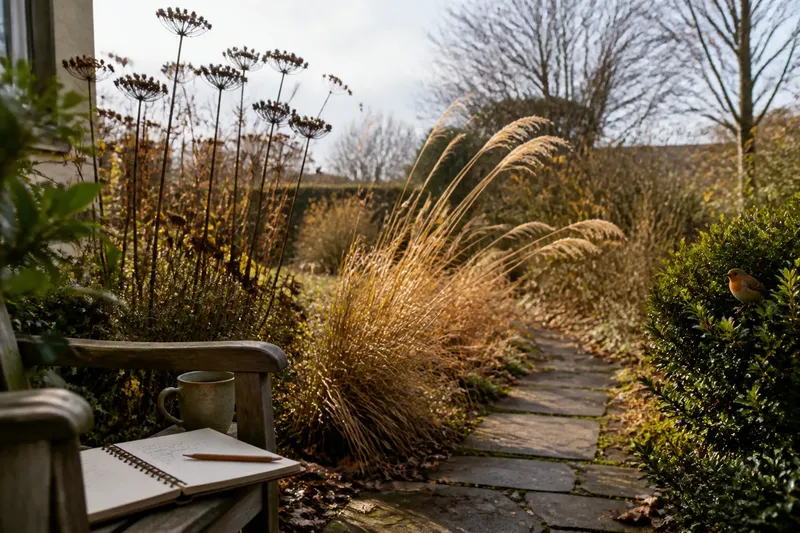
Where does a garden’s character go when its flowers fade? A late-autumn garden visit can reveal it in the rustle of dry seed heads, the bend of a grass plume and the dark net of branches against the sky. Instead of tracing familiar borders or collecting a catalogue of shapes, listen for what the season is doing: what rattles, what shelters, and what has begun to settle back into the ground.
Let late autumn set the pace
Choose a dry, calm day if you can. Start somewhere sheltered, such as a doorway or a bench, and give your eyes a moment to adjust to the subdued light. The garden may sound different before it looks different: dry stems tick against one another, leaves whisper along a fence, and a seed head can tremble at the slightest breeze.
Take a notebook and pencil, or use your phone to record a short sound clip. Note a few seasonal changes rather than every plant: a seed head still standing, a grass clump beginning to flatten, a bird taking cover in a shrub. These details make a useful record of how the garden behaves as the season advances.
Listen for movement among stems and seed heads
Pause beside a border and notice which plants move with the breeze and which stay firm. Fine grasses may sway in a soft wave; dried stems can knock together with a faint, papery sound. A rigid seed head may remain upright while the softer growth around it shifts.
Look closely at the surfaces, too. A curled leaf can catch in a stem, and dew or rain may cling to the fine threads of a seed head. Avoid brushing through planting to get a closer look: a phone camera with its zoom, or a pair of binoculars, can bring detail nearer without disturbing it.
Say you arrive at a border where upright seed heads are still dry and a neighbouring grass clump has begun to lean. In your notebook, write “seed heads rattling; grass bending towards path”, then return after the next spell of windy weather. If the grass has flattened further, that tells you its winter form is changing; if it has sprung back, its movement is part of the display.
Notice where wildlife uses the winter garden
Late-autumn planting is not only scenery. A dense evergreen can offer a sheltered resting place, while seed heads may provide food for birds. Watch from a comfortable distance for brief visits, droppings beneath a perch, or a small patch of leaves disturbed near a shrub.
Keep the visit quiet and avoid reaching into thick growth. If you find a nest or an animal that appears injured, leave it undisturbed and seek advice from an appropriate local wildlife organisation. For ordinary signs of shelter or feeding, a discreet note is enough; the point is to notice how the garden continues to be used.
Record the seasonal changes you can act on
Make each note specific enough to guide a later decision. “Border looks messy” is hard to use. “Tall stems are leaning over the path, while the lower seed heads remain upright” gives you a clearer choice: leave the standing stems for winter interest, or plan a careful trim where access is affected.
- If seed heads remain upright and do not obstruct access, leave them in place for now; if they block a path, mark the affected section and consider selective tidying.
- If grasses bend but recover after the breeze, keep them as a moving feature; if they stay flattened across a route, consider whether that position needs attention.
- If dry stems rattle without shedding into a doorway or path, note their sound and leave them; if debris collects where people walk, clear only the affected area.
- If an evergreen shrub shows signs of sheltering wildlife, keep your distance and avoid disturbance; if you suspect an animal is hurt, contact a suitable local wildlife organisation.
- If a view changes because fallen leaves cover a border edge, note the concealed boundary; if the covered area creates a slipping hazard, use another route until it is clear.
- If a plant’s winter form is unclear, photograph it from the same safe spot for later comparison; if the image still does not identify it, check a reliable plant reference before pruning.
Choose a safe place to observe from
Stay on a familiar, firm surface. Wet leaves can hide uneven paving, and frosty steps can be treacherous. Do not climb on walls, garden furniture or slippery banks for a better view; use a doorway, terrace or sturdy bench instead.
Keep tools in your pocket unless you have a clear task. This is an observation visit, not an invitation to cut back every untidy stem. If you are unsure about a plant’s care, consult a reliable gardening reference or a qualified horticultural professional before pruning.
What do gardeners ask about a late-autumn garden visit?
Which plants hold their shape after flowering?
Evergreen shrubs, ornamental grasses, seed heads and bare branches can all contribute winter form. Their appearance changes with weather, so note whether they remain upright, bend or collapse as the season moves on.
Should old stems be cut down before winter?
Not automatically: some stems provide seasonal interest or food and shelter for wildlife. Check the specific plant’s care needs, and remove only what presents a practical problem or is due for pruning.
What should I photograph on the visit?
Capture a plant’s winter form, a detail such as a seed head, and any sign of seasonal change you may want to revisit. Take the picture from a safe, fixed position so the next image can be compared easily.
When can I hear and see stems most clearly?
A gentle breeze makes movement easier to hear, while quiet conditions help you pick out small sounds. Soft daylight can bring out pale stems against a darker hedge without the glare of strong sun.
Leave with a note that will still be useful
Before you go, write one observation about how the garden is changing and one action to consider later. For instance, you might note that a grass clump is leaning towards the path, then decide to check it again before choosing whether to trim it. Keep the note with a dated photograph or sound clip.
On your next late-autumn garden visit, return to the same place and compare the evidence: perhaps the seed heads have scattered, the grass has settled, or birds are using a shrub more often. A concise record helps you distinguish a passing change from a lasting feature, and makes future pruning or planting decisions more thoughtful.